In our highly modernized urban landscapes, the 21st-century man often yearns for the wild adventures of imperial explorers from centuries ago. On weekends, they flee the drudgery of their 9-to-5 routines, seeking solace in nature’s grandeur—long-distance running through fields, climbing to the highest peaks, and gliding down snow-capped slopes. These landscapes promise beauty and joy, and an escape from the monotonous reality of daily life.
Yet, beneath this pursuit of beauty and excitement lies a troubling pattern. The earth becomes a playground for exploitation, a backdrop for thrill and profit, with its habitats rarely cared for and the boundaries of the planet ignored and disrespected. Too often, the well-being of nature is neglected, just as the well-being of women is disregarded and undervalued.
This is not a relationship of reverence, but one of conquest—where nature is engaged with only through doing, proving, and performing. In this worldview, stillness is weakness, and appreciation without extraction is unthinkable.
The male voyager who dreams of visiting the earth’s most scenic destinations simultaneously ignores the degraded ecosystems that lie in between. He prefers that the deforested habitats with eroded soil, reduced fertility, and inability to support plant life any longer remain out of view— like a woman who no longer serves his fantasy. Whether it’s the body of a woman or the body of the Earth, what is not useful to him is ignored.
As men set off on expeditions to indulge in personal growth and discovery by exploring their “motherland,” we women are left to wonder why we have no fatherland. If a woman yearned for the same experience, she would first have to reckon with the threat of violence—from the very men who claim the right to roam without fear.
Under patriarchy, many men relate to women the same way they relate to nature: they desire only select fragments of the experience, never the whole. Their gaze lingers on isolated parts of the female body, stripped of emotion, thought, or need. Likewise, their relationship with nature fixates on curated landscapes that offer escape and pleasure—spaces that ask nothing in return. In both cases, the full being is ignored, left uncared for, while he takes what he wants and offers no restoration or consideration in return.
Just as patriarchal systems fragment and objectify women, the dominant scientific paradigm dissects nature into categories and data points, stripping it of spirit, wholeness, and complexity. Male-dominated science systems, especially under colonial and capitalist influence, have long sought to classify, control, and extract rather than to listen, witness, and honor. The desire to “know” nature is often driven not by reverence, but by a need to dominate—just as women are judged and placed into boxes instead of being embraced in the full spectrum of our experience. In both cases, mystery is feared, and complexity is flattened to serve power.
While it’s important to recognize how Western science has historically been shaped by colonial and patriarchal systems, it’s equally vital to honor the truth in many of its findings—especially when they reveal the urgent need for ecological care.
Scientists warn that ecosystems may begin collapsing as soon as the 2030s under high-warming scenarios. Yet nearly half of conservative men deny the validity of climate science and the integrity of these projections. Just as the needs of nature are overlooked and seen as exaggerated under patriarchal systems—the stories and rights of women are often dismissed as false and treated with the same disregard.
I have been confidently reminded by countless men in my life that nature has a way of healing itself as justification for their lack of concern about environmental remediation or protection. But nature can only heal itself from the current level of degradation if there are actions to support the healing process. This may include afforestation and reforestation projects that improve soil health, water cycle regulation, and carbon sequestration.
This logic, used to excuse inaction, mirrors how society treats women: assuming we will keep nurturing, healing, and caretaking, even as we’re denied support ourselves. Women provide free labor in domestic settings with little support in place to sustain these efforts. The conditioned emotional unavailability of men masked as masculinity leaves women carrying not just the burdens of the home, but the parts of ourselves that men refuse to hold.
Just as women’s caregiving labor is invisible yet foundational, nature performs essential labor that goes largely unrecognized. Ecosystem services like filtering air, cycling water, regulating the climate, and enabling food production are treated as infinite and free, even though they are the very systems that make human life possible. These life-sustaining processes, much like the domestic and emotional work women perform, are rarely accurately valued, protected, or even acknowledged.
This pattern of denial and devaluation is no accident— it’s embedded in a larger system that places profit above preservation, and domination above care. Patriarchal capitalism has grossly undervalued nature for much of its existence. Global natural capital has been estimated to be worth $125 trillion yet, nature markets today are valued at only $9.8 trillion.
As millions of acres of virgin land are opened to oil drilling, creating a product that will only further degrade the land, man’s inability to see intrinsic value without exploitation mirrors how he treats the women in his life. The global economy is built upon a logic that profits from domination and renders care invisible, with billion dollar industries built on the exploitation of the natural world and the exploitation of women—making it fundamentally reliant on undervaluing both.
Like nature, our beauty is appreciated by man, providing experiences of pleasure and joy. We become the memories that make life worth living. But, we are rarely truly listened to, cared for, or recognized for our full value. We are lusted after, never loved— celebrated for what we offer, but not honored for who we are.
As a woman, I cherish my beauty. I know its light and magnetism. It has given me connection, expression, and even power. But beauty should not be a reason for exploitation, nor a barrier to being cared for. I want to be held in my wholeness—my strength, my abilities, my sorrow and joy, my stillness and storm. I deserve to be cared for, not conquered.
Like a goodhearted, patient woman who puts up with the constant chaos of a fiery man, nature is expected to do the same. To tolerate constant growth and expansion that feeds the desire for economic gain and domination harbored by men in patriarchal capitalist systems.
Our societal structures support relationships devoid of genuine care and connection, enabling further disregard for human and ecological needs on a larger scale. This dysfunction reveals the urgent need for systemic change that confronts the intertwined roots of gender-based oppression and environmental degradation.
Despite how patriarchal systems have long exploited women’s caring and healing capacities—without recognition or support—these traits remain powerful forces for transformation.
Compassion, empathy, and emotional depth—qualities often labelled as “feminine”—must be revalued and woven into the foundations of any system that seeks sustainability, justice, and collective healing. These traits are not weaknesses to be exploited, but strengths that offer a path forward—when shared, respected, and integrated across societal structures.
Throughout history, women have played a critical role in preserving the earth’s health—not just metaphorically, but through direct action. Women in rural and indigenous communities often possess deep knowledge of local ecosystems and have led protective efforts to sustain them.
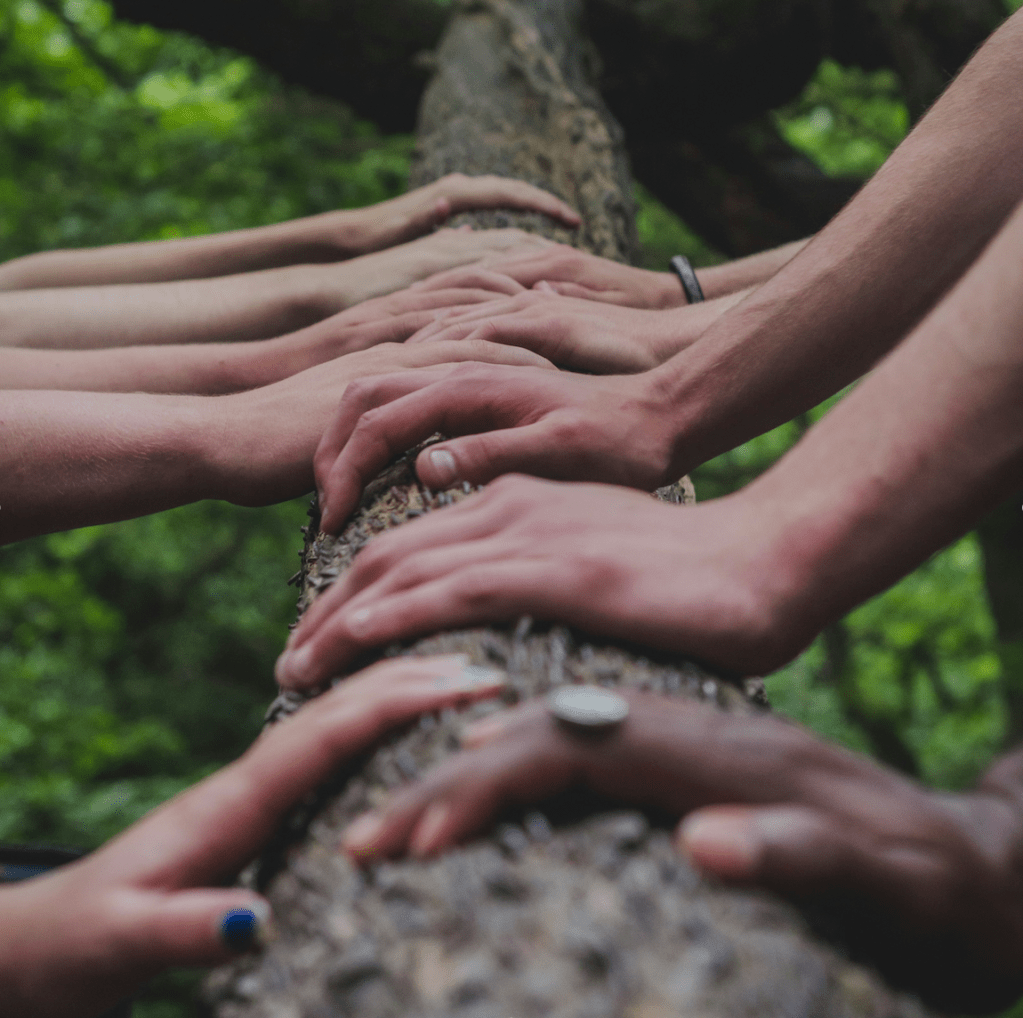
For example, in 1973, in the forests of the Indian Himalayas, a group of rural women led by Gaura Devi launched the Chipko Movement, which involved physically hugging trees to prevent them from being demolished. Their act of resistance was not only a defense of the forest, but of their community’s water, soil, and food systems. This was an embodied form of care—one that shows how women’s ecological knowledge and care translates into radical protection.
This movement, like many others led by women across the globe, reminds us that care is not passive—it is defensive, assertive, and necessary for survival. In contrast to the extractive logic of patriarchal capitalism, these actions reassert a model of relationship based on interdependence and protection, rather than conquest.
As women under patriarchal capitalism, we must be unwavering in our knowing of our own self worth. We are the creators of life—yet we must still fight to have our contributions recognized, our rights respected, and our full humanity honored. Just as we rise to defend our own dignity, we must rise to defend the ecosystems that sustain all life on Earth.