Tag: Innovation

  • A Rebellious Return to Nature: Lessons from Hundertwasser’s Art and Activism

    Art has long served as a catalyst for change, connecting information to emotion and inspiring action. In the face of the climate crisis, human imagination may play a critical role in environmental activism by bridging creativity and science to drive transformation and innovation.
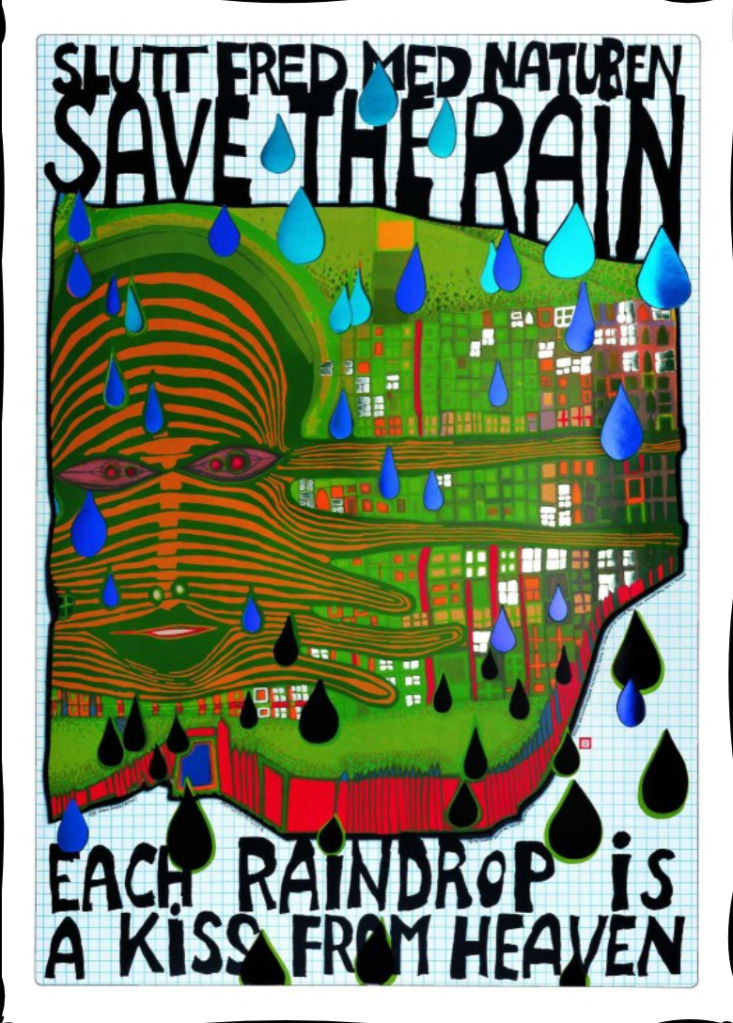
    Hundertwasser 1983

    The Science of Artistic Impact

    Several studies and projects support the idea that art can be a powerful driver for climate awareness.

    For example, research published in ScienceDirect demonstrates that artistic activism fosters emotional engagement, behavioral change, and civic participation. Additionally, the US Global Change Research Program has found that climate art exhibitions and educational programs can encourage communities to see themselves as part of the solution, inspiring both dialogue and action.

    Collaboration between arts and sciences transforms information into a sensory experience,  which makes it more likely that the information will elicit emotion and remain in our memory.

    Art’s power lies in its ability to make us feel before we act. By tapping into emotion, it connects intellectual awareness to moral responsibility. Art brings humanity to urgent political and environmental issues, allowing audiences to encounter them with new perspectives. This turns observation into involvement, inspiring people to envision how we might live differently in the future.

    As one artist-scholar observed, “The universal language of art can encourage people from all different backgrounds to want to develop actions to help live more sustainably.” 

    Art, in this sense, becomes an act of resilience. It reminds us that that restoring our bond with the environment can be as creative as it is urgent.

    Encountering Hundertwasser: A Philosophy of Color, Form, and Nature

    My personal belief in the power of art as climate action was reinforced during a trip to Vienna several years ago. I had saved my pennies for several years and planned the trip around viewing works from my two of my favorite painters, Gustav Klimt and Egon Schiele, leaders of the Viennese Secession Movement whose paintings shaped my understanding of creative freedom. But it was while I was in Vienna that I encountered a new figure who would expand my thinking even further: Friedensreich Hundertwasser.

    My first encounter with his work was at the Kunst Haus Wien, where I was enthralled by the unusual curved lines and bright hues covering the face of the building. While visiting this magnificently strange structure and viewing the paintings inside, I learned that Hundertwasser was not only an artist and architect, but an ecological visionary and environmental activist as well.

    His work merged creativity and activism into one beautifully radical philosophy. Deeply inspired by the Viennese Secession Movement, which sought to break away from artistic nationalism and the conservative art establishment of the Austrian Empire, Hundertwasser envisioned an art form that healed both people and the planet.

    His work rejected modernist straight lines, which he referred to as “godless and immoral,” in favor of spirals, organic patterns, and radiant colors that celebrated life’s natural irregularity. He was a leader in the development of new techniques and the use of unconventional materials often using homemade paints  made from organic materials while having mastered many graphic techniques including lithograph, silk screen, etching, woodcut and mixed media.

    Hundertwasser believed that humanity had created a separation from nature that was detrimental to both people and the planet and that this “aberration” must be reversed. His artworks often depict structural, environmental, and human elements while advocating for harmony between them.

    Hundertwasser summarized his idea of a life in harmony with the laws of nature in seven points which are outlined in his “Peace Treaty With Nature.”

    Ecological Conservation Through Art

    Hundertwasser created original posters in support of environmental protection efforts such as whale conservation and the promotion of public transport. He dedicated the revenue from these posters to various environmental organizations, which was a key component of his environmental protection strategy.

    While visiting the Kunst Haus Wien, I was especially moved by Hundertwasser’s poster “Save the Rain – Each Raindrop is a Kiss From Heaven,” created for the Norwegian Nature Conservancy Association to raise awareness about acid rain and its impact on forests and fish. Seeing this work in person filled me with a deep, expansive gratitude for the miracles of the natural world.

    The phrase “Each Raindrop is a Kiss from Heaven” overwhelmed me with how extraordinary our planet truly is—how every organism, from grasslands to glaciers, plays a critical role in maintaining the balance that allows us to have clean air, water, food, and medicine. These everyday miracles are sacred gifts. Protecting them is not just an act of care; it is a privilege and our responsibility as beings on this earth.

    Manifestos for People and Planet

    Hundertwasser spread his ecological positions in numerous manifestos, letters, and public demonstrations. His “Mouldiness Manifesto Against Rationalism in Architecture” from 1958 introduced ideas that remain profoundly relevant today, including the concept of “tree duty” which views integrating vegetation into architecture as a moral and ecological responsibility, promoting the idea that trees should grow on buildings as living architectural elements.

    The 1958 manifesto generally called for humanity to restore its relationship with nature by returning to organic, evolving, and humanistic architecture. This vision foreshadowed current movements in sustainable design and biophilic architecture, which similarly emphasize harmony between humans, structures, and the environment.

    Tangentially, Hundertwasser campaigned for forestation of the city through rooftop gardens and “tree tenants” that integrate greenery into urban architecture. He also developed and promoted eco-friendly waste management systems, including humus toilets and biological water purification that used aquatic plants to clean wastewater naturally.

    His buildings, such as Vienna’s Hundertwasserhaus and Kunst Haus Wien, are living artworks characterized by vegetation and a jubilant embrace of imperfection.

    In a world of homogenized cities and ecological neglect, his work proclaimed a rebellious return to nature.

    Lessons from Hundertwasser: Honoring Non-Traditional Climate Action

    Hundertwasser’s activism teaches several vital lessons. First, resistance to environmental degradation does not only require scientific credentials—it needs vision, creativity, and the courage to break away from conventional norms.

    Hundertwasser’s “Everybody Must Be Creative” manifesto argues that creativity is a fundamental human right and necessity, not a privilege of artists. He condemned what he called “the new illiteracy”—the inability to create—claiming that modern civilization suppresses innate imagination through education and standardization. 

    Hundertwasser reminds us that solutions to complex problems such as the climate crisis demand imaginative engagement from all fields and backgrounds, making creativity an essential skill across disciplines.

    His philosophy insists that ecological stewardship is a community responsibility, one that flourishes when everyone, from architects to artists and activists to ordinary citizens, claims a role in restoration and advocacy.​

    It is essential to recognize that climate action thrives through diversity of approach. Non-traditional methods like art, music, storytelling, and participatory design can catalyze real change, inspire empathy, and build movements.

    By embracing creative resistance and fostering interdisciplinary collaboration, we can expand our impact—making space for everyone to contribute, innovate, and inspire.

    To honor Hundertwasser’s legacy means advocating for the importance of art alongside science and ensuring that sustainability remains a vibrant, imaginative movement.


  • The Illusion of Green Growth: Why Degrowth is a Necessary Path to Sustainability

    Many climate scientists, environmental activists, and researchers, including myself, now reject green growth models, not because of an opposition to progress or innovation, but because the promises of “green growth” in already high-income countries are fundamentally incompatible with the scale of ecological and social challenges present across the globe.

    This preference toward degrowth is rooted in mounting scientific evidence, supported by a recent groundbreaking review published in Lancet Planetary Health titled “Post-growth: the science of wellbeing within planetary boundaries,” which challenges the assumption that economic growth is necessary or even desirable for societal progress.

    Photo by Shelley Johnson on Unsplash

    A central argument made by the authors is that the dominant narrative, which claims technological innovation and efficiency will allow for continued economic growth while reducing environmental harm, is not supported by the data. Efficiency improvements are consistently outpaced by the scale and speed of economic expansion, leading to increased resource consumption, pollution, and waste—a phenomenon known as the “rebound effect.” This effect directly undermines the idea that growth can be decoupled from environmental harm.

    The belief that technological solutions alone can address today’s ecological crises exposes the use of binary thinking to address a multifaceted problem. This technological optimism can distract from the deeper, systemic changes needed to address how societies produce, consume, and define prosperity. Overreliance on technological solutions risks obscuring the fundamental drivers of climate change and social inequality. While technological shifts and innovation will play a role, it cannot substitute for the deeper structural changes needed to address how societies produce, consume, and define prosperity.

    Research shows that market-driven approaches and the current economic system delay effective climate action by hindering the deployment of transformative technologies. Many promising climate innovations struggle to secure funding or scale because profit-driven systems tend to prioritize short-term returns over long-term societal and environmental benefits. Ironically, green growth models also rely on rapid technological deployment as a climate solution, while many proposed solutions are either unproven at scale or insufficient to address the magnitude of the problems.

    Moreover, renewable energy and other sustainable technologies are not without environmental and social costs. The extraction of minerals essential for batteries and electronics, such as cobalt and lithium, is frequently linked to environmental degradation and human rights violations. This is not to suggest that clean energy should be dismissed, but rather that its deployment must be accompanied by systemic reforms. Without broader economic and policy changes, such technologies risk perpetuating existing patterns of overconsumption, social inequalities and human rights violations.

    Crucially, the pursuit of endless economic growth is fundamentally incompatible with the Earth’s ecological boundaries. Humanity has already exceeded six of nine planetary boundaries, threatening the stability of Earth’s life-support systems. The drive for economic expansion, especially in high-income countries, is largely responsible for this overshoot, often achieved at the expense of labor and resources in lower-income nations. High-income countries, in particular, have a disproportionate impact on global emissions and resource use, and their current levels of consumption are unsustainable. If these consumption patterns persist, they are likely to precipitate ecosystem collapse and irreversible climate impacts across the globe. To avert ecological catastrophe and biodiversity loss, high-income countries must significantly reduce their material and energy use.

    Green growth strategies tend to prioritize harm reduction through technological innovation and decarbonization, while neglecting the restorative practices needed to regenerate ecosystems.Even when labeled as “green,” economic growth models frequently fail to deliver meaningful social or ecological outcomes due to the fact that market-driven interventions often neglect ecosystem restoration that is viewed as “non-profitable”. A shift in priorities is needed—from GDP growth to enhancing human well-being, equity, and ecological regeneration.

    True sustainability requires a deliberate reduction in material throughput, regeneration of depleted ecosystems, and advancement of social equity.  It is not enough to simply shift to “greener” forms of production and consumption if they still enable the exploitation and oppression of nature and non-dominant groups.

    As highlighted in recent research published in The Lancet Planetary Health, degrowth offers a scientifically grounded pathway to remain within planetary boundaries while improving health and well-being (Beyer et al., 2024). By intentionally reducing overall consumption and production—particularly in high-income countries—and reorienting economies toward equity, social cohesion, and ecological restoration, we can address the root causes of environmental degradation and social inequality.

    The Lancet article emphasizes that degrowth is not about austerity or deprivation, but about prioritizing human flourishing, reducing unnecessary work and consumption, and ensuring that everyone’s basic needs are met. This approach has the potential to lower pollution, reduce greenhouse gas emissions, and restore ecosystems, while also improving life satisfaction, reducing stress, and strengthening community ties.

    These findings point the way toward a healthier planet, fairer societies, and a higher quality of life for all—achieved not through endless economic expansion, but through a fundamental transformation of our values, priorities, and systems. It’s time to embrace a new vision of progress—one rooted in ecological balance, equity, and genuine well-being.

  • Exploring the Potential Use of Vegetation to Absorb PFAS

    Soil health is the foundation of thriving ecosystems and food systems. But what happens when our soils are tainted by “forever chemicals”-the notorious PFAS that resist breakdown and threaten food safety? Scientists are turning to plants for answers, exploring whether nature’s green powerhouses can help regenerate soil and tackle PFAS contamination.

    Photo by Silvan Schuppisser on Unsplash

    PFAS are a large group of human-made chemicals found in everything from Topo Chico to firefighting foam. They’re called “forever chemicals” because they don’t break down easily, accumulating in water, soil, and living organisms-including us. Exposure to PFAS is linked to health problems like high cholesterol, immune suppression, developmental issues, and even cancer.

    Can Plants Absorb PFAS from Soil?

    Yes-certain plants can absorb PFAS from soil, through a process known as phytoremediation. But the effectiveness depends on the plant species, the type of PFAS, and environmental conditions

    Key Findings:

    • Hemp (Cannabis sativa): Hemp has shown promise in absorbing some PFAS, especially the smaller, more water-soluble types.
      • Field trials at the former Loring Air Force Base showed that hemp could take up 10 out of 28 PFAS detected in soil. In the most successful plots, hemp removed up to approximately 2% of total PFAS from the soil, primarily accumulating these chemicals in its stems and leaves.
      • Laboratory and greenhouse experiments confirm that hemp can absorb PFAS like perfluorobutanoic acid (PFBA) into leaves, stems, and flowers, while larger, less water-soluble PFAS such as PFOS and PFOA tend to remain in the roots.
      • While hemp phytoremediation is not a comprehensive solution, it offers a promising approach to reducing PFAS levels in contaminated soils.
    • Switchgrass
      • Switchgrass has been explored as a candidate for phytoremediation of PFAS-contaminated soils, primarily because of its robust root system and ability to grow in marginal soils. Its extensive root network may help stabilize soil and potentially uptake or immobilize contaminants.
      • Research indicates that switchgrass can absorb some PFAS compounds, but uptake levels tend to be lower compared to plants like hemp or leafy greens. The majority of PFAS absorbed by switchgrass often remains in the roots rather than translocating to shoots or leaves. This characteristic could be beneficial by limiting PFAS entry into the above-ground biomass, reducing risks if the plant is harvested or grazed.
    • Leafy Greens (lettuce, kale, celery): These plants tend to accumulate higher levels of PFAS, particularly the short-chain varieties.
      • Leafy greens are known to accumulate high levels of PFAS, especially short-chain varieties, in their edible leaves. However, this high uptake is considered a food safety concern rather than a remediation advantage, since these crops are meant for human consumption and could introduce PFAS into the food chain.

    The Limits of Vegetation Based PFAS Cleanup

    While the idea is promising, phytoremediation isn’t a comprehensive solution for PFAS contamination.

    • Partial Removal: Even the best systems remove only a portion of PFAS-sometimes up to 34% for short-chain types after 90 days, but often much less for long-chain PFAS, which cling tightly to soil.
    • Slow Process: It can take multiple planting cycles to see meaningful reductions.
    • Disposal Dilemma: Plants that absorb PFAS become hazardous waste themselves. There’s currently no safe way to compost or naturally degrade these chemicals after harvest.
    • Not All PFAS Are Equal: Short-chain PFAS are more easily absorbed and moved into plant tissues, while long-chain PFAS mostly stay in the roots or soil.

    Are PFAS-Absorbing Plants Safe to Eat?

    No. Plants used to clean up PFAS-like hemp and leafy greens grown in contaminated soil-are not safe for human or animal consumption. They can concentrate PFAS in their tissues, posing health risks if eaten.

    Even homegrown produce in contaminated areas can add to your PFAS exposure, especially if you eat a lot of leafy greens.

    Safety Tips:

    • Test your soil and water for PFAS before planting edibles.
    • Use clean soil in raised beds if contamination is a concern.
    • Limit consumption and distribution of produce from known PFAS-affected areas.
    • Never consume plants grown specifically for PFAS cleanup.

    Innovations on the Horizon

    Researchers are experimenting with ways to boost plant uptake of PFAS, one method being explored pairs plants with fungi that can break down PFAS. Hybrid approaches utilizing fungi, microbes, and vegetation may one day make phytoremediation more effective and safer.

    The Bottom Line

    Plants like hemp and leafy greens can help reduce PFAS in soil, but they cannot eliminate all PFAS. Phytoremediation is best used alongside other cleanup methods, like soil washing or containment.

    Safe disposal of contaminated plants remains a critical challenge.