Every November, roughly 46 million turkeys are killed in the United States for the sake of “American Tradition.” These are curious, socially intelligent birds capable of recognizing flock mates, forming hierarchies, and communicating with unique vocalizations, yet most are reduced to a dining table centerpiece, living just 14–20 weeks before slaughter despite a natural lifespan of 10–15 years. Their short lives, filled with fear and pain, expose the uncomfortable truth that gratitude and violence are braided together in the modern Thanksgiving ritual.
Talking about turkeys means confronting the systems—colonial, patriarchal, and capitalist—that shape their lives and deaths. Thanksgiving, too, cannot be separated from the mythologies that erase Indigenous histories, stewardship, and struggles for sovereignty. This holiday invites us to rethink what, and who, we actually celebrate, honor, and consume.
Most U.S. turkeys live in industrial sheds holding 6,000–20,000 birds and are genetically engineered to grow unnaturally heavy and fast. Their bodies become so large that many cannot stand without pain, often developing joint damage, leg deformities, and heart failure; because of these proportions, they are bred almost exclusively through forced artificial insemination, with their natural social and reproductive lives erased and relabeled as “efficiency.”
Packed tightly together, birds are subjected to “management” practices like beak trimming, desnooding, and detoeing, which remove sensitive body parts without anesthesia and can cause long-term pain, altered behavior, and difficulty eating or moving.
Most turkeys raised for Thanksgiving live on litter soaked with feces and urine under artificial lighting designed to maximize growth; their rapid weight gain often outpaces skeletal development, and many collapse from heart or lung problems. This is not tradition. It is industrial design masquerading as holiday ceremony, where bodies are treated as commodities and exploited to produce life that exists only to generate profit, encapsulating patriarchal capitalist values.
The harm of industrial turkey production does not exist in a vacuum; it is built on stolen land, exploited labor, and ecological harm —precisely the systems that ecofeminism, antispeciesism, and degrowth aim to dismantle. Barns, slaughterhouses, and feedlots sit on land taken from Indigenous peoples which are converted into monoculture grain fields, while underpaid and often migrant workers shoulder the physical risk and trauma required to keep cheap meat flowing.
Thanksgiving intensifies this logic of overproduction: ever-bigger birds, subsidized grain, and millions of pounds of turkey waste each year. In a staggering display of patriarchal capitalism’s disregard for life, it is estimated that 8 million turkeys will be thrown in the trash this Thanksgiving. In this context refusing turkey becomes more than a dietary preference; it is a small but powerful act of rejecting growth-obsessed holiday consumption in favor of justice and planetary boundaries.
And yet, as animal agriculture continues to threaten ecological stability, this year’s H5N1 bird flu outbreaks expose how fragile the turkey industry really is. Since late summer 2025, between 2 and 2.2 million turkeys have been infected or mass-killed, leaving the U.S. with its smallest turkey flock in ~40 years. Zoonotic outbreaks like H5N1 are not random accidents; they are features of a system that concentrates animals, waste, and workers in the same polluted spaces.
These mass culls—often carried out through ventilation shutdown—are presented as “biosecurity,” but they are predictable fallout of confinement, genetic uniformity, and high-density sheds, as discussed in my last post “What We Do to Nature Makes Us Sick – Literally.”
By hiding the ongoing theft and enclosure of Indigenous territories, the Thanksgiving story obscures how industrial animal agriculture depends on those same lands for feed crops, confinement facilities, and slaughter plants.
Additionally, Indigenous relationships with turkeys stretch back more than 2,000 years and offer a radically different perspective of these animals than what is normalized by Thanksgiving as its celebrated today. Historical records show that Indigenous societies in the Americas valued the birds so highly that they tamed them at least twice for companionship and participation in ceremonies.
This contrast makes clear that the way turkeys are treated today is not natural or inevitable—it is a political and economic choice.
This web of ecological and social harm reveals that struggles for land, animal liberation, and bodily autonomy are never separate. Colonial systems reshape landscapes and species to fit extractive needs, while the same logic reaches into gender and labor. What happens to the land, and what happens to the animals forced onto it, mirrors what happens to the people whose labor and autonomy are also controlled.
Ecofeminism names these shared roots and insists that none of these violences can be confronted in isolation. Instead of systems built on domination, extraction, and sacrifice zones, it asks us to move toward plant-based, low-impact, and degrowth-aligned ways of living that are grounded in care, interdependence, and respect for all beings.
Reimagining Thanksgiving through this lens means refusing to isolate animal suffering from land theft, climate chaos, and labor exploitation.
Supporting Indigenous land defenders, eating plant-based seasonal foods, and telling honest histories become interconnected acts of resistance to a system that treats life as expendable.
In place of a holiday that normalizes mistreatment, these choices move us toward traditions rooted in reciprocity, repair, and the shared right of all beings to live and thrive.
With COVID-19 cases rising again globally and health agencies monitoring potential threats from bird flu (H5N1, H9N2) and yellow fever, global organizations — including the World Health Organization (WHO) — have recognized the ongoing risk. They recently signed a new Pandemic Agreement to improve preparedness, as high-threat infectious hazards continue to increase due to animal agriculture, deforestation, urbanization, and global wildlife trade.
These risks compound: habitat destruction not only accelerates species extinctions but creates more pathways for dangerous viruses to emerge, multiply, and move into human populations.
Root Causes: How Human Activity Drives Spillover
Over 70% of new diseases in people—and nearly all pandemics, like COVID-19—originate from animal microbes also known as “zoonoses”. These spillovers occur when human activities disrupt natural barriers, usually through activities like:
Agricultural expansion. Converting natural habitats like forests and grasslands into farmland is responsible for over 30% of emerging disease events, making it one of the strongest predictors of spillover. Land use change like this causes increased contact between humans, livestock, and wildlife, which makes it easier for diseases to pass from wild animals to people (zoonotic spillover).
Intensive livestock production. Factory farms crowd genetically similar animals together in unsanitary dwellings, creating ideal conditions for pathogens to spread and evolve. Animals in factory farms frequently suffer from a variety of illnesses, and many of these conditions often go unnoticed or untreated due to the sheer number of animals and unmanageable animal-to-worker ratios. These environments substantially increase the probability that a disease will jump from animals to humans.
Deforestation. Clearing forests for agriculture, logging, or settlement destroys wildlife habitats and forces animals into closer proximity with people and livestock. More than 70% of deforestation is driven by agricultural expansion, particularly for grazing and feed crops.
Urbanization. Rapid growth of cities creates densely populated areas where diseases can spread quickly and where expanding development pushes into formerly wild spaces, increasing human contact with wildlife.
Global wildlife trade. The legal and illegal trade of wild animals transports pathogens across borders and brings stressed, diverse species into close quarters with humans, creating ideal spillover conditions.
Together, these activities fragment habitats and expose people and livestock to roughly 1.7 million undiscovered viruses, an estimated 600,000 of which could infect humans.
A World Wildlife Fund (WWF) analysis adds that pandemic risk is best understood as feedback loops: agricultural expansion, luxury wildlife demand, industrialization, and global trade all reinforce each other, making spillover not just a single event but the product of complex, interconnected systems.
Increasingly, scientists and policy leaders advocate for the “One Health” approach—a recognition that human, animal, and ecosystem health are inseparably connected. One Health calls for collaborative action across medicine, veterinary science, agriculture, and environmental protection, aiming to address the root causes of disease outbreaks and ecosystem collapse at their source rather than simply reacting to emergencies.
These root causes mirror the forces behind climate change and global inequality: weak regulation, extractive industries, and profit-driven systems that degrade the very ecosystems acting as our first line of defense.
Animal Agriculture: A Major Driver of Climate Breakdown and Pandemic Risk
Animal agriculture sits at the center of both ecological disruption and disease emergence, making it one of the most significant contributors to pandemic risk.
Livestock farming is responsible for 12–20% of global greenhouse gas emissions, produces 37% of human-caused methane, and drives widespread deforestation, water contamination, and biodiversity loss. As global meat consumption rises, the demand for land and feed crops intensifies, pushing agricultural expansion deeper into natural habitats.
Industrial livestock operations also create ideal conditions for infectious disease evolution. Crowded, genetically similar animals enable viruses to spread rapidly and mutate. Many zoonotic pathogens — including avian and swine influenza and antibiotic-resistant bacteria — originated in high-density livestock systems. Live animal transport and global supply chains further amplify transmission risk, moving pathogens across borders at rapid speed.
The ongoing surge in bird flu outbreaks illustrates these risks: in 2025, millions of chickens and turkeys in North America have been killed to contain infection as H5N1 spreads rapidly in crowded factory farms, which serve as hotspots for viral mutation and transmission. When avian flu is detected in a flock, authorities typically employ mass culling methods—such as gassing or suffocation—which kills every bird in the shed to halt the disease’s spread. This process highlights the normalization of suffering and waste in our food systems.
Research consistently shows that transitioning toward plant-based food systems would reduce emissions, restore ecosystems, and significantly lower the risk of emerging pandemics.
Structural Causes: Capitalism, Inequality, and Rising Risk
Large-scale deforestation, industrial agriculture, and wildlife commodification are often financed and directed by high-consuming nations and powerful multinational corporations like JBS and Walmart. These actors profit from activities that degrade ecosystems, while the resulting disease and environmental risks are displaced onto communities.
In a growth-focused global economy, capital flows into industries such as factory farming, fossil fuel extraction, mining, and wildlife trade — sectors that depend on cheap land, weak environmental regulation, and low-cost labor. As these industries expand into biodiversity-rich regions, they fragment ecosystems, displace wildlife, and intensify opportunities for spillover. Global supply chains built for speed and efficiency further entrench this dynamic by externalizing environmental and health costs onto exploited nations and communities.
The very industries that degrade ecosystems and compromise community health channel their profits to corporations and wealthy nations, widening the gap between those who bear the consequences and those who reap the rewards.
Many of the world’s spillover “hotspots” lie in tropical regions managed or inhabited by Indigenous and rural communities who often lack the political power to resist industrial expansion by dominant nations. As a result, these communities face polluted waterways, degraded land, inadequate health infrastructure, and increased exposure to zoonotic disease. When outbreaks occur, indigenous and rural communities experience disproportionate illness, loss of income, and long-term social disruption. Meanwhile, high-consuming nations continue to benefit from exploitation and the availability of cheap commodities, while displacing the risks elsewhere.
The WWF highlights that protecting Indigenous land rights, supporting community-led resource management, and ensuring equitable participation in conservation are not simply justice issues—they are frontline strategies for pandemic prevention. Indigenous management consistently leads to better conservation outcomes, healthier forests, and—by extension—lower pandemic risk.
Calls for pandemic justice echo those of the climate justice movement: those who benefit most from ecological destruction must bear the greatest responsibility for prevention, restoration, and reparative action.
How U.S. Policy Has Increased Vulnerability
If we learned anything from COVID-19 its that reactionary approaches to pandemics are slow, expensive, and inadequate to the scale of the threat (WHO). Instead, prevention must start with transforming the policies that drive ecosystem disruption.
However, recent U.S. policy decisions under the Trump administration have amplified vulnerability to disease emergence and environmental harm simultaneously.
For example, despite warnings from experts about the risk of foot-and-mouth disease in Argentinian cattle, the Trump administration moved forward with policies to expand beef imports from Argentina, a decision that raises the risk of introducing animal diseases into U.S. herds and exemplifies the prioritization of economic and trade interests over ecological and public health safety.
Additionally, there have been significant cuts and delays to federal research funding for emerging infectious diseases, undermining efforts at the National Institutes of Health (NIH) and other agencies to develop new diagnostics, vaccines, and treatments, and diminishing the nation’s ability to monitor and respond to public health threats.
Finally, the U.S. withdrawal from the (WHO) disrupted global data sharing and international public health collaboration, creating funding gaps in vital programs, limiting U.S. influence over international health policy, and reducing coordination on pandemic preparedness with global partners..
These decisions mirror broader climate deregulation: short-term economic gains for those in power, long-term social, health and environmental risks for everyone else.
Plant Based Diets as Resistance
When governments prioritize corporate interests over ecological and public health, it is easy to feel powerless. Yet individual choices — especially the ways we eat and where we put our dollars — offer a powerful form of resistance. A plant-based diet directly withdraws support from the industries most responsible for both climate instability and pandemic risk.
A plant-based diet reduces risk across multiple systems:
Lower pandemic risk: Reducing dependence on factory farming — one of the primary incubators of zoonotic disease — lowers the conditions that enable pathogens to spill over into human populations. Studies show that people eating primarily plant-based diets experience lower COVID-19 severity and improved immune outcomes.
Climate mitigation: Plant-based diets reduce greenhouse gas emissions by nearly 50%, while also decreasing water use, pollution, and resource depletion.
Biodiversity protection: Less demand for meat slows deforestation, protects wildlife habitats, and reduces landscape fragmentation — one of the strongest predictors of zoonotic spillover.
Individual dietary choices can activate our collective power. Even small shifts — like choosing plant-based meals a few times per week — reduce pressure on natural habitats and act as a form of climate care.
International health bodies like WHO, IPBES, and the One Health High-Level Expert Panel consistently affirm that addressing pandemic risk requires protecting ecosystems, reducing destructive land use, and prioritizing community well-being over extractive growth.
Conclusion
While plant-based diets strengthen pandemic and climate resilience at an individual level, systemic transformation is needed to address climate and pandemic risk on a global scale.
The most effective pandemic mitigation strategies cited from IPBES to WHO, BMJ, and global One Health networks include:
Nature-first prevention: Restoring forests, ending deforestation, and protecting biodiversity hotspots maintain the ecological stability that prevents spillover. Healthy ecosystems act as protective shields against emerging infectious diseases.
Integrated One Health policies: Aligning human, animal, and environmental health strengthens surveillance, early detection, and coordinated responses across sectors. The One Health model is now widely recognized as essential for global pandemic preparedness.
Community-led conservation: Indigenous and frontline communities consistently achieve stronger conservation outcomes through place-based knowledge, stewardship, and long-term relationships with land. Their leadership protects biodiversity while strengthening social resilience.
Redirecting funding toward prevention: Investing billions annually in early-warning systems, ecological restoration, and public health infrastructure breaks the costly cycle of reactive crisis management. Prevention is more effective, equitable, and sustainable than emergency response.
These solutions reflect the growing alignment between climate justice and pandemic prevention frameworks. Both demand a shift away from extractive, profit-driven models of growth and promote moving toward long-term ecological stability, community well-being, and global solidarity.
Climate care is pandemic prevention. Biodiversity is a protective shield that stabilizes the climate, regulates ecosystems, and buffers humanity from disease. When we dismantle that shield, the consequences cascade through every aspect of life.
The latest evidence, echoed by WWF, makes clear: The solutions that prevent pandemics are the same ones that restore justice and planetary health— restoring ecosystems, reducing reliance on animal agriculture, supporting Indigenous leadership, and enacting policies that prioritize people and the planet.
Art has long served as a catalyst for change, connecting information to emotion and inspiring action. In the face of the climate crisis, human imagination may play a critical role in environmental activism by bridging creativity and science to drive transformation and innovation.
Several studies and projects support the idea that art can be a powerful driver for climate awareness.
For example, research published in ScienceDirect demonstrates that artistic activism fosters emotional engagement, behavioral change, and civic participation. Additionally, the US Global Change Research Program has found that climate art exhibitions and educational programs can encourage communities to see themselves as part of the solution, inspiring both dialogue and action.
Collaboration between arts and sciences transforms information into a sensory experience, which makes it more likely that the information will elicit emotion and remain in our memory.
Art’s power lies in its ability to make us feel before we act. By tapping into emotion, it connects intellectual awareness to moral responsibility. Art brings humanity to urgent political and environmental issues, allowing audiences to encounter them with new perspectives. This turns observation into involvement, inspiring people to envision how we might live differently in the future.
As one artist-scholar observed, “The universal language of art can encourage people from all different backgrounds to want to develop actions to help live more sustainably.”
Art, in this sense, becomes an act of resilience. It reminds us that that restoring our bond with the environment can be as creative as it is urgent.
Encountering Hundertwasser: A Philosophy of Color, Form, and Nature
My personal belief in the power of art as climate action was reinforced during a trip to Vienna several years ago. I had saved my pennies for several years and planned the trip around viewing works from my two of my favorite painters, Gustav Klimt and Egon Schiele, leaders of the Viennese Secession Movement whose paintings shaped my understanding of creative freedom. But it was while I was in Vienna that I encountered a new figure who would expand my thinking even further: Friedensreich Hundertwasser.
My first encounter with his work was at the Kunst Haus Wien, where I was enthralled by the unusual curved lines and bright hues covering the face of the building. While visiting this magnificently strange structure and viewing the paintings inside, I learned that Hundertwasser was not only an artist and architect, but an ecological visionary and environmental activist as well.
His work merged creativity and activism into one beautifully radical philosophy. Deeply inspired by the Viennese Secession Movement, which sought to break away from artistic nationalism and the conservative art establishment of the Austrian Empire, Hundertwasser envisioned an art form that healed both people and the planet.
His work rejected modernist straight lines, which he referred to as “godless and immoral,” in favor of spirals, organic patterns, and radiant colors that celebrated life’s natural irregularity. He was a leader in the development of new techniques and the use of unconventional materials often using homemade paints made from organic materials while having mastered many graphic techniques including lithograph, silk screen, etching, woodcut and mixed media.
Hundertwasser believed that humanity had created a separation from nature that was detrimental to both people and the planet and that this “aberration” must be reversed. His artworks often depict structural, environmental, and human elements while advocating for harmony between them.
Hundertwasser summarized his idea of a life in harmony with the laws of nature in seven points which are outlined in his “Peace Treaty With Nature.”
Ecological Conservation Through Art
Hundertwasser created original posters in support of environmental protection efforts such as whale conservation and the promotion of public transport. He dedicated the revenue from these posters to various environmental organizations, which was a key component of his environmental protection strategy.
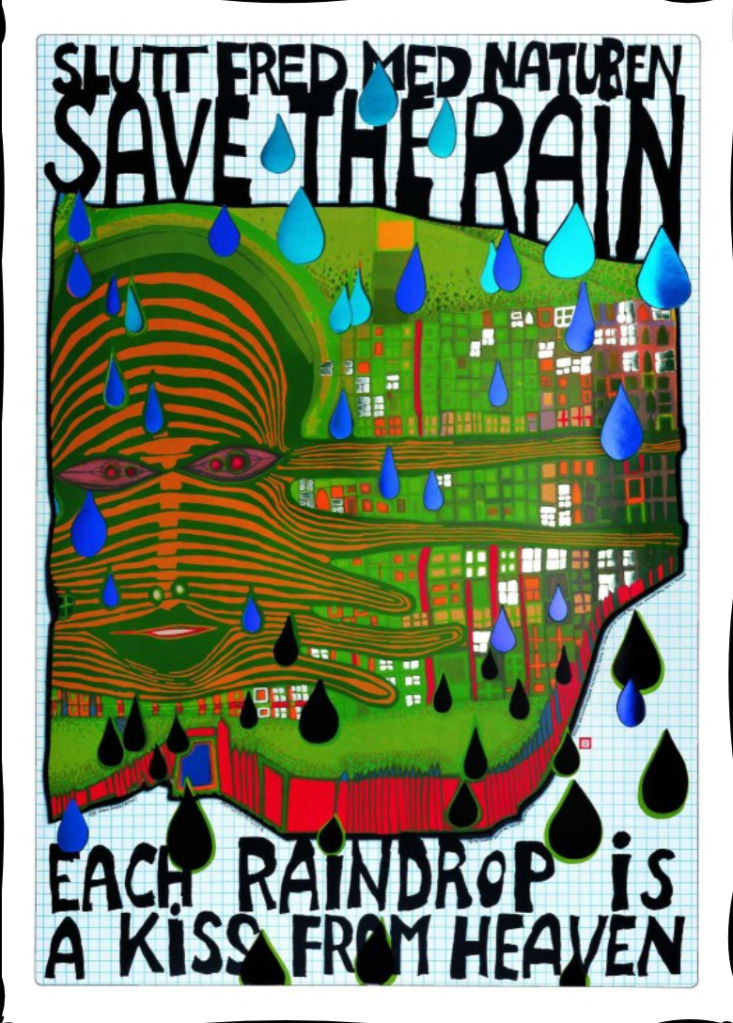
While visiting the Kunst Haus Wien, I was especially moved by Hundertwasser’s poster“Save the Rain – Each Raindrop is a Kiss From Heaven,” created for the Norwegian Nature Conservancy Association to raise awareness about acid rain and its impact on forests and fish. Seeing this work in person filled me with a deep, expansive gratitude for the miracles of the natural world.
The phrase “Each Raindrop is a Kiss from Heaven” overwhelmed me with how extraordinary our planet truly is—how every organism, from grasslands to glaciers, plays a critical role in maintaining the balance that allows us to have clean air, water, food, and medicine. These everyday miracles are sacred gifts. Protecting them is not just an act of care; it is a privilege and our responsibility as beings on this earth.
Manifestos for People and Planet
Hundertwasser spread his ecological positions in numerous manifestos, letters, and public demonstrations. His “Mouldiness Manifesto Against Rationalism in Architecture” from 1958 introduced ideas that remain profoundly relevant today, including the concept of “tree duty” which views integrating vegetation into architecture as a moral and ecological responsibility, promoting the idea that trees should grow on buildings as living architectural elements.
The 1958 manifesto generally called for humanity to restore its relationship with nature by returning to organic, evolving, and humanistic architecture. This vision foreshadowed current movements in sustainable design and biophilic architecture, which similarly emphasize harmony between humans, structures, and the environment.
Tangentially, Hundertwasser campaigned for forestation of the city through rooftop gardens and “tree tenants” that integrate greenery into urban architecture. He also developed and promoted eco-friendly waste management systems, including humus toilets and biological water purification that used aquatic plants to clean wastewater naturally.
His buildings, such as Vienna’s Hundertwasserhaus and Kunst Haus Wien, are living artworks characterized by vegetation and a jubilant embrace of imperfection.
In a world of homogenized cities and ecological neglect, his work proclaimed a rebellious return to nature.
Lessons from Hundertwasser: Honoring Non-Traditional Climate Action
Hundertwasser’s activism teaches several vital lessons. First, resistance to environmental degradation does not only require scientific credentials—it needs vision, creativity, and the courage to break away from conventional norms.
Hundertwasser’s “Everybody Must Be Creative” manifesto argues that creativity is a fundamental human right and necessity, not a privilege of artists. He condemned what he called “the new illiteracy”—the inability to create—claiming that modern civilization suppresses innate imagination through education and standardization.
Hundertwasser reminds us that solutions to complex problems such as the climate crisis demand imaginative engagement from all fields and backgrounds, making creativity an essential skill across disciplines.
His philosophy insists that ecological stewardship is a community responsibility, one that flourishes when everyone, from architects to artists and activists to ordinary citizens, claims a role in restoration and advocacy.
It is essential to recognize that climate action thrives through diversity of approach. Non-traditional methods like art, music, storytelling, and participatory design can catalyze real change, inspire empathy, and build movements.
By embracing creative resistance and fostering interdisciplinary collaboration, we can expand our impact—making space for everyone to contribute, innovate, and inspire.
To honor Hundertwasser’s legacy means advocating for the importance of art alongside science and ensuring that sustainability remains a vibrant, imaginative movement.
Visiting Luvin Arms Animal Sanctuary, a nonprofit refuge for farmed animals, filled me with a complex concoction of emotions including joy, grief, sorrow, and hope. Each animal had a name, a story, a unique personality, and a desire to live. Often, their survival came down to just one person having the courage to speak up, and choose compassion over indifference.
Photo of Lily the pig during my visit to Luvin Arms, taken July 2025
I met Maybell, a cow who had once served the tormenting role of a “Judas cow” in which one cow is used to lead others to slaughter. Maybell had carried out this tormenting task for years until the day it was meant to be her turn. The farmer’s wife, who had formed a unique bond with her, couldn’t go through with it. In an act of rare mercy, she arranged for Maybell to live out her life at Luvin Arms instead.
Other cows had been saved by a truck driver who was transporting calves to be slaughtered for veal. There is an expectation that some calves will die en route, therefore it is common in the veal industry to overload transport cars in order to ensure that the correct number of calves will be slaughtered each day. On this particular trip, all the calves survived which meant that some were considered “extra.” They “excess” calves were scheduled to be returned to the farm, only to be slaughtered later. Unable to stomach their inevitable fate, the driver delivered the “excess” calves to Luvin Arms instead. That single act of conscience changed their lives forever.
As I walked through the sanctuary, I was struck by the stark contrast between the animals’ traumatic pasts and the peaceful lives they now live. Joy welled up in me as I watched pigs play together in sunflower fields and flop onto their sides at my feet, inviting belly rubs just like my dog does at home. It was incredible to witness their capacity to trust and love after surviving the systemic cruelty and abuse of factory farms. At the same time, I felt a deep sorrow for the countless animals who will never get to live the life they deserve.
Lily and Lizzie: The Right to Rescue in Action
Among the many powerful rescue stories I learned, Lily and Lizzie’s particularly stuck out due to their involvement in the historic Smithfield Trial. These two piglets were saved from one of the largest factory farms in the U.S., a facility run by Smithfield Foods in Utah.
In 2017, activists from Direct Action Everywhere (DxE) entered the farm and documented horrifying conditions. They found pigs in metal gestation crates unable to turn around, dead and dying piglets on the floor, and sick animals left without care. Lily and Lizzie were two of the weakest. Rather than leave them behind, the activists carried them out and ended up saving their lives.
This act of “open rescue” is a cornerstone of the animal rights movement. It involves openly entering facilities, documenting conditions, and rescuing animals who would otherwise suffer or die. Activists argue that animals in distress deserve the same emergency protections as humans and pets—and that compassion should override property claims when suffering is involved.
The defense didn’t just highlight animal suffering—it challenged the very idea that these lives could be reduced to property. These persuasive arguments even lead some jurors to make personal changes, such as refusing to eat ham after the trial.
Surveilled Like Criminals: The FBI and Industry Tactics
What came next was chilling. After the rescue, the FBI launched a multi-state search for Lily and Lizzie. They raided two animal sanctuaries—including Luvin Arms—looking for the piglets. They even took ear clippings, without anesthesia, from the pigs to test DNA in an attempt to prove which animals had been “stolen” from Smithfield.
Why would the FBI devote resources to chasing two sick piglets? The answer lies in the growing alliance between law enforcement and the meat industry.
A 2023 exposé by Wired revealed that the Animal Agriculture Alliance (AAA)—a powerful industry group—worked directly with the FBI’s Weapons of Mass Destruction Directorate to surveil nonviolent animal rights activists like those with DxE. Industry-aligned spies infiltrated activist events, secretly recording and photographing people, then passed intelligence to the FBI. One undercover informant even provided details of group chats, organizing meetings, and travel plans.
The FBI created a dedicated email tip line for industry insiders to report animal activists. Internal documents showed that factory farm operators were encouraged to label activists as potential “bioterror” threats—even when no violence or sabotage occurred.
This isn’t new. Since the early 2000s, federal agencies have labeled eco- and animal rights groups as domestic terrorism threats. Under the Animal Enterprise Terrorism Act (AETA) peaceful civil disobedience—such as rescuing animals or documenting abuse—can be prosecuted as terrorism. This legal overreach is part of a larger campaign to silence dissent and criminalize compassion.
Meanwhile, the actual conditions in factory farms, including rampant untreated disease, pollution, and systemic cruelty, continue without consequence.
Why Animal Sanctuaries Matter
Sanctuaries like Luvin Arms are more than places of refuge. They are acts of resistance.
Animal sanctuaries give animals the chance to rebuild trust and learn how to receive affection after being abused. They allow animals to experience life through play, curiosity, and meaningful bonds—experiences they would never have while confined in cages.
Lily and Lizzie found a forever home at Luvin Arms. Lily, who I got to spend more time with during my visit, became a sanctuary ambassador. She is playful, sweet, and deeply affectionate. She formed loving relationships with her pig family and the people who cared for her, showing every visitor what pigs are capable of when given a chance to live their lives freely and fully. She is living proof of a truth the industry hides: pigs are emotionally complex, intelligent, and deserving of care.
Animal sanctuaries also challenge the dominant view that animals exist for human use. They serve as living arguments against speciesism, the belief that lives of certain species inherently matter more than others. Every rescue challenges a system that commodifies life. Every animal is someone, not something.
The Power of Compassion
If you ever doubt that one person can make a difference, remember Maybell’s rescuer. Remember the truck driver who rerouted calves to sanctuary. Remember the activists who risked prison so Lily and Lizzie could live. Lives were saved because someone refused to look away.
Animal lives matter. And the right to rescue reminds us that sometimes, doing the right thing means breaking the rules, because rules are often written to protect cruelty—not compassion.
If you feel moved by the idea of open rescue, I encourage you to visit the Direct Action Everywhere (DxE) website where there are a number of opportunities to support this kind of work or donate.
As the sun swims through the sign of the Crab, we enter a season ruled by the Moon, the celestial body that commands the oceans’ tides. A primordial longing flows through us. We’re drawn to rivers, lakes, beaches, and streams, urging us to return to the planet’s circulatory system: water, the lifeblood of Earth.
Cancer calls us to care for what nourishes us. As sunflowers reach for the sky and peaches swell with sweetness, the gifts of summer rely on the same water we seek for solace, are made of ourselves, and depend on to survive.
But what happens when this essential element is in crisis?
Water stress now affects over 4 billion people for at least one month per year. Climate change, poor water governance, and pollution are diminishing both the quantity and quality of our freshwater reserves. In many parts of the world—including the western U.S., India, the Middle East, and regions of sub-Saharan Africa—demand has begun to outpace supply.
It’s easy to separate the ocean from the stream near your home, or the tap in your kitchen. But they’re part of the same story. Over 80% of ocean pollution originates from land—carried downstream by rivers stripped of their buffers and wetlands polluted by industrial development.
This is why caring for rivers, lakes, and wetlands is also ocean conservation. It’s why holistic water management—across the entire hydrological and industrial supply chain—is essential.
The Hidden Water in Our Consumption
The water supply chain is a vast and intricate system:
Water is drawn from rivers, lakes, reservoirs, and aquifers.
It’s filtered, treated, and conveyed—often through aging, leaky infrastructure—to homes, farms, and factories.
Used water becomes wastewater, which must be captured, cleaned, and either discharged or ideally, reused.
In US cities across Georgia, Illinois, and Michigan, up to 80% of treated water is lost before it even reaches a faucet due to degrading infrastructure. And a far greater share of water is invisible to us, embedded in the products we consume daily.
This is known as virtual water, or more precisely, a product’s water footprint. It measures the total volume of water used across a product’s life cycle—from production to disposal. The average water footprint of a pound of beef is around 1,800 gallons. A single cotton T-shirt? Nearly 3,000 gallons.
To understand these numbers, it helps to break water footprints into three components:
Blue water refers to surface and groundwater from lakes, rivers, and aquifers that is used for irrigation, manufacturing, and household needs. It’s the most visibly extracted and often the most contested.
Green water is the rainwater stored in soil and used by plants. It supports crops and forests and is essential for agriculture that relies on rainfall rather than irrigation.
Grey water, in this context, measures the volume of freshwater needed to assimilate pollutants and restore water quality to safe levels. It’s the hidden cost of contamination—how much clean water must “dilute” the waste we’ve introduced.
When we consider this fuller picture, it becomes clear: water scarcity is not limited to deserts or drought zones. It is built into global trade, stitched into textiles, and woven into the very infrastructure of modern consumption.
Within this tapestry, our choices ripple outward.
Responsible Consumption
A shift toward veganism is not merely dietary—it’s a profound act of water stewardship. Producing plant-based foods generally requires significantly less blue and green water than animal agriculture, which demands irrigation for feed crops and vast volumes for livestock upkeep. By embracing more plant-forward meals, we ease nature’s burden, allowing water to remain in wild places, nourishing ecosystems and communities alike.
The same applies to the clothes we wear. Growing crops like cotton requires significant amounts of blue and green water, while dyeing and processing fabrics contributes to grey water pollution on a massive scale. Yet when we choose reused or recycled textiles, we can avoid unnecessary resource extraction.
Capitalism and the Privatization of Water
To speak of water scarcity as a matter of personal virtue alone is to mistake the tributary for the river. The burden of sustainable consumption, so often placed on individuals, obscures the deeper currents of exploitation that shape our present crises.
Under capitalism, rivers are dammed and diverted, aquifers drained, and watersheds sacrificed at the altar of growth. Market logic privileges extraction over renewal, severing water from the web of life it sustains.
“Capitalism turns material abundance into socially constructed scarcity. No resource—not even water—is exempt from that violent process.” – Meg Hill
Corporations and states, in their quest for capital and control, privatize and siphon water from the commons which leaves communities deprived and ecosystems depleted.
In the U.S., nearly 73 million people rely on private water companies, which often charge rates nearly 60% higher than public utilities. While some claim privatization brings efficiency, many of these companies are less accountable to the public and have been criticized for underinvesting in infrastructure while extracting steady profits from a basic human need.
Meanwhile, financial markets have begun treating water as a speculative asset. In 2020, the CME Group launched a water futures market in California, allowing investors to trade on scarcity itself.
Michael Burry, the investor known for predicting “The Big Short,” has publicly stated that the best way to invest in water is through food production—growing crops in water-rich areas and selling them in water-poor regions—not by buying water rights directly. The growing involvement of private investors in water rights and infrastructure raises concerns about balancing profit with public access, especially as many communities face water shutoffs, contamination, and drought.
Corporate Water Consumption
In many places, water is not a right but a privilege. Its availability is governed not by need, but by wealth, geography, and political power. For example, in Mesa, Arizona, a desert city facing prolonged drought, Meta and Google have built massive data centers that rely on millions of gallons of potable water daily for cooling. These facilities can use as much as 4 million gallons per day, which is enough to supply water to tens of thousands of people. Residents and tribal groups are left scrambling to secure remaining resources, highlighting how access to clean water is granted to those with leverage, not need.
This is not an anomaly. Across the world—from avocado exporters in water-privatized Chile, where entire rivers are diverted to serve export markets, to Coca-Cola bottling plants in India that have drained local aquifers and left surrounding villages parched—access to water increasingly flows toward corporate greed, not ecological need or human rights. This global economic order, built on the extraction of “cheap nature,” externalizes its costs onto the most vulnerable. Through these examples we can see that the ultra-wealthy are positioning themselves to profit from water while millions face shutoffs, contamination, and drought reveals the brutal logic of commodification: water flows not toward life, but toward capital. Those least responsible for water degradation often suffer its gravest consequences.
Water as a Weapon of War
Water injustice also takes political and colonial forms, with one of the most extreme examples occurring in Palestine, where control over water is wielded as a tool of occupation and exclusion. These layers of oppression deepen the global struggle for water justice and remind us that water is inseparable from broader fights for freedom and dignity.
Water Justice Advocacy
Yet acknowledging these systems is not to surrender. Our choices—how we nourish ourselves, how we dress, how we show up for what we believe in—still create ripples in the current.
Water carries us across oceans, through summers, and through survival itself. To honor water is to protect what sustains us. Not just in moments of drought or disaster—but daily, collectively, deliberately.
This means rejecting the myth of limitless extraction and embracing an ethic of reciprocity. True transformation won’t come from consumer virtue alone. It demands systemic accountability, collective action, and a reimagining of our relationship with water—and with one another.
We must advocate for public water stewardship, invest in resilient infrastructure, and support movements fighting for environmental and social justice. Because water is not a commodity. It is a life source. A right. And its fate is inseparable from our own.
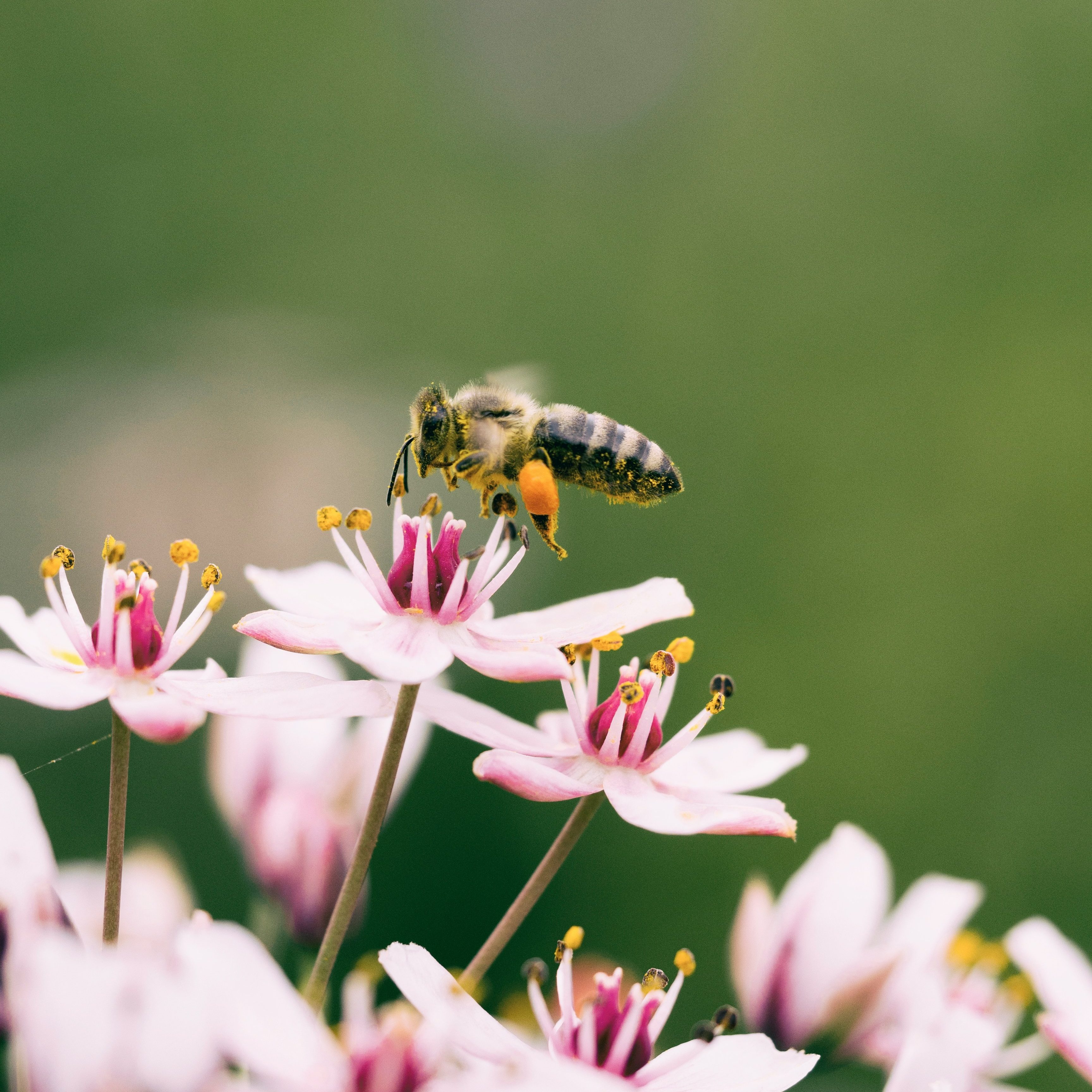
Recent data reveals that between June 2024 and February 2025 alone, U.S. beekeepers lost 62% of colonies, totaling 1.1 million hives. This crisis threatens food systems, as 35% of global crops depend on pollinators. As foundational components of food webs and providers of critical ecosystem services, their collapse signals ecological destabilization and threatens to unravel the complex networks that sustain life on Earth.
While scientists grapple with causes, ranging from pesticide exposure to parasitic mites like Varroa destructor, individuals can take meaningful steps to support both honeybees and their underappreciated native counterparts, such as mason bees.
However, their efficiency pales compared to native species like mason bees, which achieve a 95% pollination rate versus honeybees’ 5%. Unlike honeybees (introduced from Europe), mason bees are solitary, sting-resistant, and active in cooler weather, making them vital for early-blooming crops like cherries.
Beyond crop pollination, bees are essential to the overall health of our ecosystems, supporting native plant biodiversity and providing food sources for other wildlife.
Threats to Bee Populations: A Deep Dive
The drastic 2025 decline stems from multiple, interconnected stressors:
Parasites and Pathogens: Varroa destructor mites, tiny but deadly, weaken colonies by feeding on bee fat reserves and transmitting viruses. Similarly, the fungus Nosema ceranae disrupts bees’ digestion, leading to malnutrition and colony collapse. These biological threats are exacerbated by climate change, which weakens bees’ immune systems, making them more susceptible.
Pesticides: Neonicotinoids, pyrethroids, and other agricultural chemicals impair bees’ navigation, learning, and immune function, increasing their vulnerability to other stressors. Systemic pesticides, absorbed into plant tissues, contaminate pollen and nectar, exposing bees throughout the growing season. Studies show that even sublethal doses of pesticides can drastically reduce colony survival rates.
Habitat Loss and Fragmentation: Urbanization, monoculture farming, and deforestation reduce floral diversity and nesting sites, leaving bees with fewer food sources and places to reproduce. Increased land use for animal grazing and agriculture, including crop cultivation, is a main driver of habitat loss and fragmentation. The conversion of diverse landscapes into vast stretches of single crops deprives bees of the varied diet they need for optimal health.
Climate Change: Shifting weather patterns, extreme events (droughts, floods, heat waves), and altered bloom times disrupt bees’ foraging and nesting cycles, impacting their survival and reproductive success. Phenological mismatches—where plants and pollinators are out of sync—can lead to starvation and reduced pollination rates. Rising temperatures also alter bee distribution and behavior, affecting their interactions with other species.
Lack of Genetic Diversity: Modern commercial bee breeding practices have led to a narrowing of the gene pool within bee populations. This lack of diversity can lead to reduced resistance to disease and decreased adaptability to environmental changes.
The Government Isn’t Coming: Why Individual Action Matters
Despite mounting scientific evidence and dire warnings from experts, governmental action to protect bee populations remains insufficient.
Here’s why you can’t wait for the government:
Defunding of Environmental Programs: Environmental agencies face budget cuts and deregulation, limiting their ability to enforce existing protections or implement new ones.
Political Influence: The pesticide industry exerts significant influence on policy decisions, often undermining efforts to restrict harmful chemicals.
Slow Bureaucracy: Even when policies are enacted, bureaucratic delays can render them ineffective. By the time regulations are implemented, bee populations may have already suffered irreversible damage.
Political gridlock, lobbying from powerful agricultural interests, and a general lack of prioritization of environmental issues have hampered meaningful policy changes.
Lobbying organizations spend millions annually downplaying the risks of pesticides, pushing for weaker regulations, and promoting false solutions. For example, Syngenta is the largest seller of pesticides highly toxic to bees, generating $1.3 billion annually from neonicotinoids and other pollinator-harming chemicals. Despite evidence linking neonics to colony collapse, Syngenta lobbied against EU bans, instead promoting “field margins” as a distraction.
Without government support, individual and community action is crucial because it’s immediate, direct, and can create a ripple effect, influencing others to take action and pressuring policymakers to respond.
How Individuals Can Help: A Comprehensive Guide
Support Native Bees:
Install Bee Hotels: Provide nesting sites for solitary bees like mason bees, leafcutter bees, and others. Use cardboard tubes, drilled wood blocks, or pre-made nesting boxes (like those from Crown Bees) to provide shelter. Ensure the hotels are made of natural, untreated materials.
Offer Mud Sources: Mason bees seal nests with mud. A small patch of moist clay soil in your garden aids their reproduction.
Create a Bee Bath: Bees need water, too! Provide a shallow dish of water with pebbles or marbles for them to land on while drinking.
Leave the Leaves: Resist the urge to rake up all your leaves in the fall. Many native bees overwinter in leaf litter.
Plant Bee-Friendly Gardens:
Prioritize Native Blooms: Native plants are adapted to local conditions and provide the most nutritious pollen and nectar for native bees. Goldenrod, milkweed, asters, coneflowers, and sunflowers are excellent choices.
Ensure Seasonal Variety: Plant spring bulbs (crocuses), summer wildflowers (sunflowers), and fall bloomers (sedum) for year-round forage.
Skip Hybrids: Many ornamental plants lack pollen or nectar. Choose single-petal varieties over double-petal ones, as the latter often have reduced pollen production.
Plant in Clumps: Bees find it easier to forage on large patches of the same flower.
Let Your Lawn Grow: Allowing your lawn to grow a little longer provides habitat and food for bees and other pollinators.
Support Sustainable Agriculture:
Buy Organic: Organic farms often use fewer harmful chemicals and maintain hedgerows for pollinators.
Support Local Farmers: Visit farmers’ markets and CSAs that prioritize sustainable farming practices.
Prioritize Plant-based: Plant-based diets benefit bees by reducing the environmental pressures associated with animal agriculture, which is a major driver of habitat destruction, pesticide use, and climate change—all significant threats to pollinator populations.
Grow Your Own Food: Even a small vegetable garden can provide a haven for bees and other pollinators.
Compost: Composting reduces waste and provides nutrient-rich soil for your garden.
Educate and Collaborate:
Knowledge Sharing: Teach neighbors to build bee hotels or plant pollinator gardens.
Support Conservation Science: Donate to groups studying honeybee health or native bee conservation. Organizations like Save The Bees and BeesMAX use crowdfunding to support bee research, habitat restoration, and other initiatives to help bees.
Citizen Science: Report bee sightings via apps like iNaturalist to aid research.
Spread the Word: Use social media to raise awareness about the bee crisis and inspire others to take action. Share my post!
In today’s fast-paced world, fitting these activities into your schedule might feel overwhelming. However, they can be done in groups, making them more manageable—and offering a great way to foster social connection in an increasingly isolated society.
A Future for Pollinators
While honeybee declines dominate headlines, solutions require a shift toward biodiversity. Research shows that orchards with both honeybees and mason bees achieve higher fruit sets, highlighting the synergy between species.
The interconnectedness of climate change, biodiversity loss, and the insect crisis demands integrated strategies. By nurturing native plants and bees, individuals can buffer ecosystems against collapse.
From urban balconies to rural farms, every mud-capped tube and pesticide-free flower matters. The buzz of bees—whether honeybee or mason—is a sound worth saving. The survival of these essential creatures depends on our collective action. It is time to act, not just for the bees, but for our own future.