Tag: news

  • Lily and Lizzie the Pigs: Their Story and the Right to Rescue

    Visiting Luvin Arms Animal Sanctuary, a nonprofit refuge for farmed animals, filled me with a complex concoction of emotions including joy, grief, sorrow, and hope. Each animal had a name, a story, a unique personality, and a desire to live. Often, their survival came down to just one person having the courage to speak up, and choose compassion over indifference.

    Photo of Lily the pig during my visit to Luvin Arms, taken July 2025

    I met Maybell, a cow who had once served the tormenting role of a “Judas cow” in which one cow is used to lead others to slaughter. Maybell had carried out this tormenting task for years until the day it was meant to be her turn. The farmer’s wife, who had formed a unique bond with her, couldn’t go through with it. In an act of rare mercy, she arranged for Maybell to live out her life at Luvin Arms instead.

    Other cows had been saved by a truck driver who was transporting calves to be slaughtered for veal. There is an expectation that some calves will die en route,  therefore it is common in the veal industry to overload transport cars in order to ensure that the correct number of calves will be slaughtered each day.  On this particular trip, all the calves survived which meant that some were considered “extra.” They “excess” calves were scheduled to be returned to the farm, only to be slaughtered later. Unable to stomach their inevitable fate, the driver delivered the “excess” calves to Luvin Arms instead. That single act of conscience changed their lives forever.

    As I walked through the sanctuary, I was struck by the stark contrast between the animals’ traumatic pasts and the peaceful lives they now live. Joy welled up in me as I watched pigs play together in sunflower fields and flop onto their sides at my feet, inviting belly rubs just like my dog does at home. It was incredible to witness their capacity to trust and love after surviving the systemic cruelty and abuse of factory farms. At the same time, I felt a deep sorrow for the countless animals who will never get to live the life they deserve.

    Lily and Lizzie: The Right to Rescue in Action

    Among the many powerful rescue stories I learned, Lily and Lizzie’s particularly stuck out due to their involvement in the historic Smithfield Trial. These two piglets were saved from one of the largest factory farms in the U.S., a facility run by Smithfield Foods in Utah.

    In 2017, activists from Direct Action Everywhere (DxE) entered the farm and documented horrifying conditions. They found pigs in metal gestation crates unable to turn around, dead and dying piglets on the floor, and sick animals left without care. Lily and Lizzie were two of the weakest. Rather than leave them behind, the activists carried them out and ended up saving their lives.

    This act of “open rescue” is a cornerstone of the animal rights movement. It involves openly entering facilities, documenting conditions, and rescuing animals who would otherwise suffer or die. Activists argue that animals in distress deserve the same emergency protections as humans and pets—and that compassion should override property claims when suffering is involved.

    Yet the agriculture industry views such rescues as theft. Wayne Hsiung and Paul Darwin Picklesimer, who rescued Lily and Lizzie, were charged with multiple felonies. But in a landmark 2022 trial, a Utah jury acquitted them of all charges.

    The defense didn’t just highlight animal suffering—it challenged the very idea that these lives could be reduced to property. These persuasive arguments even lead some jurors to make personal changes, such as refusing to eat ham after the trial.

    Surveilled Like Criminals: The FBI and Industry Tactics

    What came next was chilling. After the rescue, the FBI launched a multi-state search for Lily and Lizzie. They raided two animal sanctuaries—including Luvin Arms—looking for the piglets. They even took ear clippings, without anesthesia, from the pigs to test DNA in an attempt to prove which animals had been “stolen” from Smithfield.

    Why would the FBI devote resources to chasing two sick piglets? The answer lies in the growing alliance between law enforcement and the meat industry.

    A 2023 exposé by Wired revealed that the Animal Agriculture Alliance (AAA)—a powerful industry group—worked directly with the FBI’s Weapons of Mass Destruction Directorate to surveil nonviolent animal rights activists like those with DxE. Industry-aligned spies infiltrated activist events, secretly recording and photographing people, then passed intelligence to the FBI. One undercover informant even provided details of group chats, organizing meetings, and travel plans.

    The FBI created a dedicated email tip line for industry insiders to report animal activists. Internal documents showed that factory farm operators were encouraged to label activists as potential “bioterror” threats—even when no violence or sabotage occurred.

    This isn’t new. Since the early 2000s, federal agencies have labeled eco- and animal rights groups as domestic terrorism threats. Under the Animal Enterprise Terrorism Act (AETA) peaceful civil disobedience—such as rescuing animals or documenting abuse—can be prosecuted as terrorism. This legal overreach is part of a larger campaign to silence dissent and criminalize compassion.

    Meanwhile, the actual conditions in factory farms, including rampant untreated disease, pollution, and systemic cruelty, continue without consequence.

    Why Animal Sanctuaries Matter

    Sanctuaries like Luvin Arms are more than places of refuge. They are acts of resistance.

    Animal sanctuaries give animals the chance to rebuild trust and learn how to receive affection after being abused. They allow animals to experience life through play, curiosity, and meaningful bonds—experiences they would never have while confined in cages.

    Lily and Lizzie found a forever home at Luvin Arms. Lily, who I got to spend more time with during my visit, became a sanctuary ambassador. She is playful, sweet, and deeply affectionate. She formed loving relationships with her pig family and the people who cared for her, showing every visitor what pigs are capable of when given a chance to live their lives freely and fully. She is living proof of a truth the industry hides: pigs are emotionally complex, intelligent, and deserving of care.

    Animal sanctuaries also challenge the dominant view that animals exist for human use. They serve as living arguments against speciesism, the belief that lives of certain species inherently matter more than others. Every rescue challenges a system that commodifies life. Every animal is someone, not something.

    The Power of Compassion

    If you ever doubt that one person can make a difference, remember Maybell’s rescuer. Remember the truck driver who rerouted calves to sanctuary. Remember the activists who risked prison so Lily and Lizzie could live. Lives were saved because someone refused to look away.

    Animal lives matter. And the right to rescue reminds us that sometimes, doing the right thing means breaking the rules, because rules are often written to protect cruelty—not compassion.

    If you feel moved by the idea of open rescue, I encourage you to visit the Direct Action Everywhere (DxE) website where there are a number of opportunities to support this kind of work or donate.
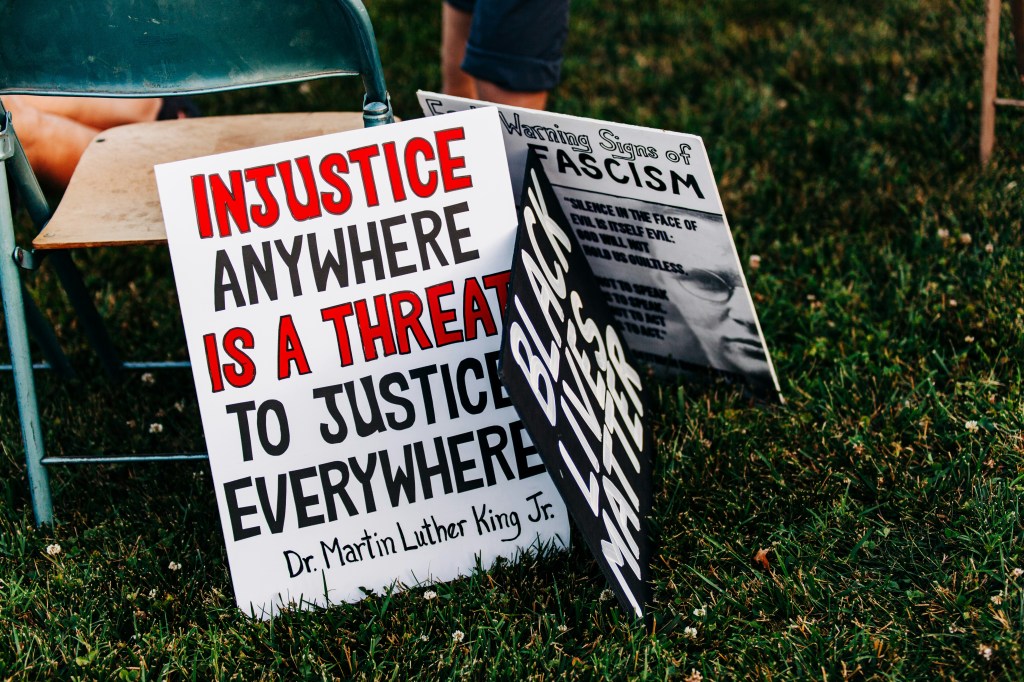

  • Juneteenth in a Burning World: Prison Labor, Wildfires, and Systemic Racism

    As we reflect on Juneteenth and its legacy of freedom, we must also reckon with the ways systemic racism still permeates our society—especially in how we prepare for and respond to climate disasters. Today, one of the most egregious examples of this injustice is playing out in real time: while the federal government dismantles environmental protections and disaster infrastructure, it increasingly relies on the underpaid, or often unpaid, labor of incarcerated people—disproportionately Black and brown—to fight wildfires. This is not just a policy failure; it is a modern form of environmental slavery.

    Photo by Heather Mount on Unsplash

    Defunding Disaster Response and Climate Policy

    Climate change has intensified the severity and frequency of wildfires across the United States. Over the past 40 years, the average number of acres of forested land consumed by wildfires each year in the United States has increased by 1,000%.

    Rather than addressing this crisis with the urgency it deserves, the Trump administration has actively undermined the nation’s ability to prevent and respond to climate disasters by:

    • Defunding Disaster Infrastructure: Trump has pushed to phase out FEMA, shifting responsibility to under-resourced state governments.
    • Data Destruction: Eliminating NOAA’s “billion-dollar disaster” database erases a critical tool for tracking climate-related damage and allocating aid.
    • Withdrawal from Climate Agreements: Exiting the Paris Agreement and cutting $3.7 billion in clean energy and carbon capture funding—including California decarbonization projects—further isolates the U.S. from global climate efforts and abandons marginalized communities to worsening environmental risks.
    • Unequal Disaster Aid: FEMA’s funding formulas often require local cost-sharing, leaving low-income communities behind. Studies show that as the proportion of people of color increases in a region, the amount of federal disaster aid tends to decrease.

    The Rise of Exploitative Prison Labor

    As federal climate infrastructure erodes, the state turns to prisons—not prevention. In California and beyond, incarcerated people are increasingly relied upon to fill the labor gap in wildfire response. These individuals—often Black or brown—are paid as little as $1 a day, if anything, to perform life-threatening work without proper training, gear, or protections.

    This isn’t rehabilitation or opportunity. It’s exploitation. Incarcerated firefighters are frequently barred from post-release employment in the very field they risked their lives to serve. They are often denied parole, early release, or livable wages. Meanwhile, the state profits from their labor during climate disasters caused in part by the very same policies that left their communities unprotected.

    This system is not new. It is a direct continuation of America’s long history of racialized labor exploitation. The 13th Amendment abolished slavery except as punishment for a crime—and this loophole has been systemically weaponized to maintain racial hierarchies through incarceration. For example, Black Americans—just 13% of the U.S. population—make up 37% of the prison population. Over 80% of arrests are for low-level, nonviolent offenses, and Black youth are disproportionately targeted for surveillance and criminalization.

    The more fires we face, the more bodies are needed. And because of systemic racism in policing and sentencing, those bodies are overwhelmingly Black and brown. This creates a feedback loop: environmental neglect feeds incarceration, and incarceration becomes a substitute for climate policy.

    The Feedback Loop of Neglect

    Black and Indigenous communities, along with other communities of color, are more likely to live in wildfire-prone areas or to suffer the cascading consequences of these disasters—such as poor air quality, housing instability, and economic loss. These vulnerabilities are not accidental.

    The same communities that are over-policed, under resourced, and left behind in public health planning are then called upon to clean up the very disasters they were never protected from in the first place.

    This is not just an environmental issue—it is a racial and human rights crisis.

    Why This Matters for Juneteenth

    Juneteenth commemorates the day when enslaved people in Texas finally learned of their freedom—two and a half years after emancipation was declared. It is a day of resistance, celebration, and reckoning. But it is also a reminder: freedom was delayed, and it remains incomplete.

    In 2025, Black Americans are still being forced into unpaid labor under deadly conditions. Still disproportionately policed and imprisoned. Still left out of disaster response while being asked to carry it on their backs.

    To honor Juneteenth is to demand more than symbolic freedom. It is to fight for a future where Black communities are not over-policed, over-incarcerated, or overexploited—but are protected, resourced, and central to our vision of a world that is prioritizes peace and prosperity for people and the planet.

  • Oppression to Action: Ecofeminism’s Critical Role in Solving the Climate Crisis

    As we witness both the decline of women’s rights and the weakening of environmental protections, the ecofeminist movement has become more crucial than ever.

    Shane Rounce, Unsplash.com

    Ecofeminism is a philosophical and political movement that emerged in the 1970s, connecting feminist and environmental concerns by recognizing the interconnected oppression of women and nature under patriarchal systems. The term was coined by French feminist Françoise d’Eaubonne in 1974, sparking a wave of academic and activist interest. Throughout the 1970s and 1980s, ecofeminism gained traction as scholars and activists explored the links between gender inequality and environmental degradation. 

    Key figures in the movement include Vandana Shiva and Maria Mies, whose work has been instrumental in shaping ecofeminist theory and practice. Together, Shiva and Mies developed a comprehensive ecofeminist framework that emphasizes the interconnectedness of social and ecological issues, challenges the dominant paradigm of exploitation, and promotes a more sustainable and equitable world. 

    Patriarchal capitalism simultaneously exploits women and nature through interconnected systems of domination that view both women and nature as resources to be controlled and exploited for profit. As evidenced by Shiva and Mies, our capitalist-patriarchal framework has led to environmental degradation, the marginalization of women, and the erosion of sustainable economies.

    Shiva argues that women, especially in the Global South, often bear the brunt of this exploitation as they are the primary caretakers of natural resources and communities while being most vulnerable to climate impacts. Patriarchal capitalism not only perpetuates gender inequality but also threatens the very foundations of life by undermining ecological balance and sustainable practices. This system is built on a hierarchical worldview that prioritizes masculine traits like dominance and aggression while devaluing feminine qualities such as compassion and empathy.

    Traditionally feminine traits such as compassion and empathy are critical to include in the formation of systems that prioritize sustainability, longevity and equality over endless economic growth powered by exploitation. Research demonstrates a strong correlation between women’s political leadership and proactive climate change policies. Countries with higher percentages of women in parliament consistently show greater commitment to environmental protection, evidenced by their increased likelihood to ratify international climate treaties and implement more stringent environmental regulations. There is a statistically significant and positive correlation between the presence of women in climate negotiations and an increased mention of gender in climate policy discussions. This suggests that women’s participation leads to increased climate action in general as well as more comprehensive and effective climate responses by amplifying the focus on gendered impacts within environmental policy.

    A crucial aspect of ecofeminist thought is the recognition and valuation of women’s work and knowledge. This acknowledgment extends to women’s roles in grassroots organizing and community-based activism, which often drive sustainable practices and environmental justice initiatives. Ecofeminists also emphasize the importance of biodiversity and sustainable practices, viewing them as integral to creating a more equitable and environmentally sound future

    Furthermore, there is a profound connection between women and biodiversity as women play a critical role in preserving the earth’s health. Women in rural and indigenous communities often possess deep knowledge of local ecosystems and sustainable resource management practices. This traditional ecological knowledge is invaluable for developing effective conservation strategies and sustainable land use practices.

    Shiva states that “the marginalization of women and the destruction of biodiversity go hand in hand,” highlighting women’s position as both vulnerable to and crucial for conserving biodiversity.

    Ecofeminist alternatives seek to promote systems that support a sustainable world which radically reimagines our economic and social structures, recognizes the importance of all living things, and prioritizes regeneration and equality over exploitation and domination. This movement is more urgent than ever in the current state of climate emergency paired with increasing violence against women and diminishing women’s rights.

    The Trump Administration has amplified interrelated social and environmental challenges as the they have withdrawn the US from the Paris agreement, removed climate change mentions from USDA websites, reversed support and incentives for low-carbon technology, overturned women’s rights resulting in increased maternal mortality and significant threats to women’s health, while setting the precedent that violence  against women is acceptable.

    President Trump and many of his elected officials have been accused and convicted of sexual assault and abuse, perpetuating and further normalizing exploitation of women’s bodies. Upholding this kind of behavior supports a culture that takes women’s ownership of their bodies away from them and puts it in the hands of those who want to harm and control them. This sends the message that your body does not belong to you and you don’t get to control what happens to it which is exactly what anti-reproductive rights movements support.

    Similarly, patriarchal capitalists have normalized and rewarded practices that abuse the earth by polluting ecosystems, degrading soil quality, and exploiting natural resources in pursuit of personal and economic gain with no regard for the impact this has on ecosystems and the beings that live within them.

    The diminishing support for climate action under the Trump administration exacerbates danger to women on a global scale as women are disproportionately affected by climate change. With 6 of 9 planetary boundaries already crossed, climate inaction will lead to increased natural disasters and decreased access to critical natural resources such as food and water.

    Climate-related disasters often lead to increased gender-based violence with women being 14 times more likely to be harmed during a disaster, as women are more vulnerable during displacement and when competing for scarce resources. On a global scale, women are more likely to be impacted by floods, storms, and heatwaves due to their roles in the household, limited mobility, and limited economic freedom.

    In this context, ecofeminist principles have become more critical than ever, offering a framework for understanding and addressing the intertwined issues of environmental protection and women’s rights. By recognizing the intersection of social inequalities and climate change, we can develop more effective and equitable solutions that address the unjust systems which have supported the current level of environmental degradation and inequality.

    Elevating women’s voices in environmental policymaking and ensuring their active participation in climate action is crucial for creating comprehensive and impactful strategies to combat the climate crisis.

    Ecofeminist solutions often promote alternative economic models such as subsistence economies, recognizing their potential to reduce environmental impact and foster community resilience. A subsistence economy is one where economic activity is primarily directed towards needs rather than profit. This shifts economic focus onto necessities without overexploiting resources, thus these economies naturally tend to stay within planetary boundaries and sustainable ecological limits. By emphasizing local production and consumption, ecofeminism advocates for decentralized models that can lead to shorter lead times, lower transportation costs, and increased flexibility in meeting local demands. 

    Prioritizing ecofeminist values and strategies can inspire collective climate action by reframing narratives, addressing root causes, empowering diverse voices, fostering community-based solutions, promoting holistic approaches, and cultivating hope and resilience.